
Collection of Bowles "Diaphragm" stethoscopes in their original cardboard or wooden box.

The Pilling Special Bowles' Patent [Stethoscope] with cloth case in original wood box, George P. Pilling & Son Co., Philadelphia PA. , 1901

Pilling made Genuine Bowles* Stethoscope in original cardboard box, c. 1930. * Trade Mark Reg. U.S. Pat. Off.

Bowles Stethoscope in original cardboard box, medium size, c. 1909

Bracelet Stethoscope, A Blood Pressure Stethoscope, Bowles Patent, Made by The George Pilling & Son Co, Philadelphia, PA, C. 1920. The stethoscope is in its original wooden box, with the metal bracelet and "button" on the diaphragm to assess the korotkoff sounds. Also shown is the metal snap-on cover to protect the diaphragm when not in use to measure blood pressure.
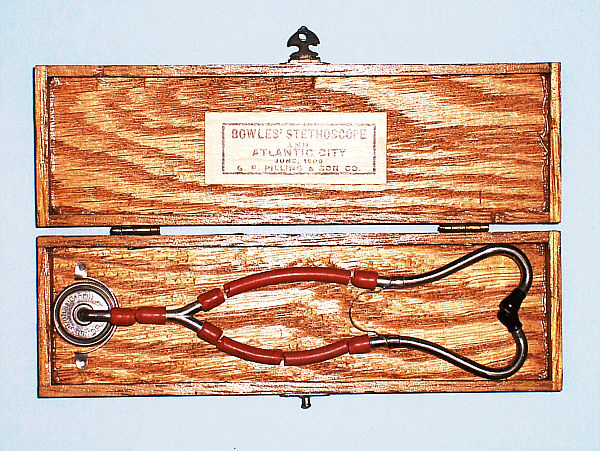
A rare sales sample Bowles stethoscope in its original wood box that was probably made for an Atlantic City medical meeting (note the label on the top half of the box) in June 1909. The box is 5.5 inches long and 1.5 inches wide. The sample Bowles stethoscope is only 5 inches long.

Bowles stethoscope made in Germany by Bauer and Häselbarth - Chirurg, c. 1955
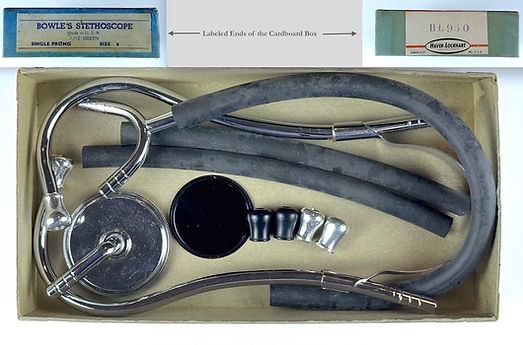
Haver-Lockhart Bowles stethoscope in its original cardboard box with extra diaphragm and two sets of earpieces, c. 1950. Haver Lockhart Laboratories was a veterinary product company, so this could be a veterinary stethoscope or human stethoscope or both!

Labtron Bowles stethoscope made by Graham-Fielkd, Inc., c. 2000s

Marshall bowles stethoscope with pouch for carrying made by Omron Healthcare, c. 1977. The stethoscope was donated by John Heimerdinger who was a volunteer firefighter for 65 years and volunteer emergency medical services technician for 33 years for the Armonk, NY Fire Department.